
I’ve been asked a lot about book bans recently, so let’s round up all the questions, and my best attempts at answers, in a post for the bookban-curious.
Q: Hey Rachel, has your book been banned yet?
That’s a tricky question. First, a “banned book” refers to books withdrawn from the library, or prohibited from use in a school (PEN America.) A book might not technically be banned, but still affected by censorship. For example, decades ago when I was a kiddo, upset grown ups painted underwear over Mickey’s weenie in Maurice Sendak’s In The Night Kitchen (example image from ScopeNotes.)

Second, authors don’t always know if their book is banned or censored or defaced-by-the-weenie-phobic. When folks succeed at censoring a book they don’t say “welp we’d better email the author and tell them the news.” That said—
A: I know of three censorship incidents involving The Real Riley Mayes, and they all happened in the last three months.
The first- at Samuels Public Library in Front Royal, Virginia- I learned from someone working to keep challenged books in the library. The second – at Columbia County Library in Georgia- I discovered by googling the book title and clicking “news.” The third- at Boyle County Public Schools in Kentucky- I heard about on my car radio (followed by that very sad song from the Barbie movie, making it a rough morning all around.)
Thanks to the hard work of librarians in each community, none of these challenges have banned The Real Riley Mayes. Samuels Public Library kept challenged books on their shelves. After Boyle County Schools removed over 100 books with LGBTQ characters, students, parents, librarians, and the Kentucky Department of Education persuaded the school officials to reshelve the books. The case in Georgia is being decided at a library board meeting in the next couple of weeks.
Q: Isn’t it cool if your book gets banned?
There’s all these mugs and t-shirts with the text “Read Banned Books!” surrounded by sweet flames. It means READing banned books is cool, like late 60s muscle cars are cool and sleeve tattoos are cool- I get that. There’s a myth that when a book is banned, everyone runs out and buys it to see what’s so evil about it- but it’s a myth. Friends sometimes say that phrase- “if so many people are upset, you must be doing something right!” I get what they mean, but it doesn’t fix how I feel when censorship comes around.
A: So far, censorship does not feel cool.
Q: Ah, So… is it upsetting to find out that someone didn’t like your book?
No no no. That’s not what I mean. I can shrug off criticism. For example, here’s a real-life one-star review of The Real Riley Mayes on Goodreads:

“This book feels like it was written by an alien who has read enough kids graphic novels to approximate what they are supposed to look like and be about, but the alien also has some kind of aphasia that makes them unable to recreate realistic human dialogue. I hate it.” – Matthew Metzdorf
When I read this review, my heart did not sink. Matthew read my book! It’s an accurate review. Yes I did read a bunch of kids’ graphic novels before making The Real Riley Mayes. Yes I struggle with putting words together- and so does Riley! And yes I can be so bad at communicating I suspect I’m not a human. But I can’t be an alien— earth feels too much like home. I’m probably more like— a bear in a human body. But I stray from my point.
My point is- bad reviews don’t shake me. I pour a cup of coffee, sigh “oh darn, Matt Metzdorf didn’t like my book.” Then I lumber down to the river, scoop up about thirty nine salmon, and have a lovely breakfast. It’s no big whoop.
Book bans, and book challenges, are different from criticism.
When a book challenge happens, the person making the challenge:
– Doesn’t like the book, and also
– Doesn’t want anyone else to read the book, and also
-Asks local government to make it illegal for others to read the book, and also
-Doesn’t think this is overreacting at all.
Q: Why does anyone want to ban or censor The Real Riley Mayes?
When someone challenges a book, they must fill out a form called a “reconsideration request.” This form is also used when someone wants a banned book put back in the library. You can read an reconsideration request challenging Riley Mayes below, it was written by Erik Bilk. Or is it Erik Dilk. (Sorry Erik, your writing is small, and your marker is fat.)


“LGBQ aimed at young children,” Mr. Dilk writes. First of all, there’s no LGBQ without the T for our trans friends, so let’s correct that: LGBTQ aimed at young children. Second, I didn’t know LGBTQ was a thing we could aim. Radar / gaydar I’ve heard of. Raygun / gaygun? Nope, not a thing. Third, they don’t want children encouraged to deny their sexuality. Me neither! That’s why I drew the book, Mr. Dilk.
A: So far, the challenges are explicitly discriminating against LGBTQ people.
Q: That stinks. Does that make you angry?
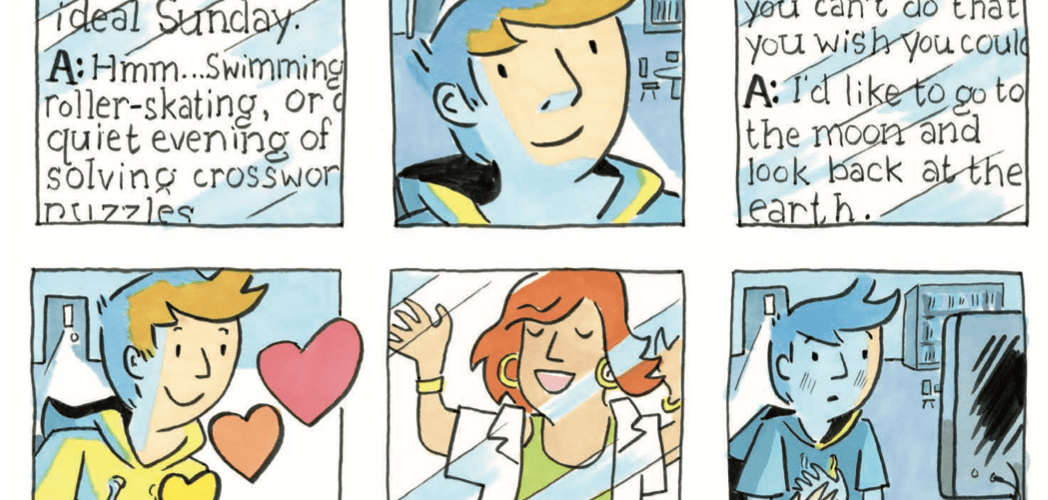
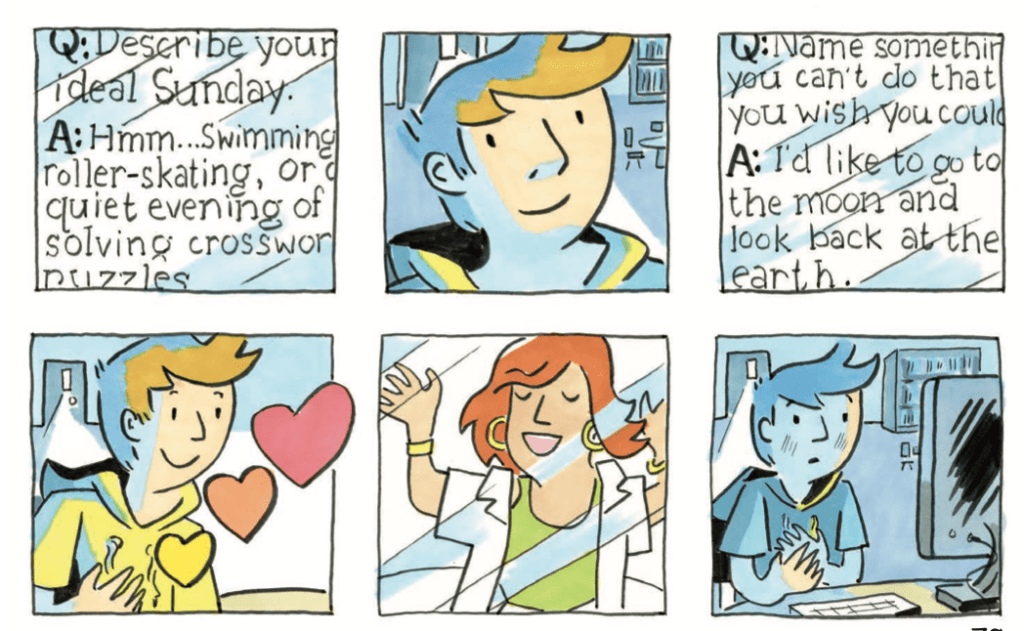
Yeah. It’s not a perfect book. But it was my first book. I wanted to help young people understand what love feels like. That love can be scary and goofy and odd, but it’s also huge and wonderful and drives human connection. Okay, I might be building it up bigger and better than it is. It’s about a dude-ish girl class clown and her celebrity crush on a famous tv comedian. But it’s also about love, okay?
When I read the handwritten line “remove the material” on the reconsideration request form, that did make my heart sink. I could see seven years of working on The Real Riley Mayes, all rewinding backwards, flipflopping through a film projector until there’s nothing but a blank white square of light and a whirrrrrrr. My attempt at helping queer young people understand what’s going on inside their hearts, just— gone.
Censorship isn’t the same as criticism. Censorship attempts to undo, delete, and destroy art.
Q: What is with people? Why are people such cruel ignorant fascist poop-heads?
When you ask this, do you really want an answer? Or are you just venting? I am happily married to a woman who is an academic authority on various right-wing movements, including anti-gay movements, white supremacist movements, and curriculum disputes. So if you ask this while she’s around, she can tell you an answer. She’ll tell you an even longer, better answer if you pay her speaking fee. However, she is not writing this blog post. I am.
I honestly I don’t know why people want to ban The Real Riley Mayes. The book is not about sex or anything “racy”- though I am against banning those books as well! Do book banners really want to keep a young person from learning about love? To keep them from knowing about that huge emotion that drives humans toward each other? Why? What future would we be making where we don’t know how to love?

A: Perhaps there’s no love in their hearts.
Know of an incident of book censorship in your community?
Tell the American Library Association Office of Intellectual Freedom. They’ll put you in touch with help.
 Rachel Elliott
Thanks for sending. We haven’t moved into Instagram. It was wonderful to read your thoughtful, yet amusing, response to haters. I can remember a night
Thank you so much for this very thoughtful post; I am sorry your book is being targeted, along with so many other resources for children–especially but not only queer and non-white children, who are already marginalized and abused by the system as it is.